Flow State Triggers: The Three You Can Actually Arrange
Most of what gets described as flow is a symptom, not a lever. Three of its conditions can be set up in advance, the rest happen or they do not, and knowing which is which changes what you do at the desk.

Flow has three preconditions you can arrange before you start: the difficulty has to roughly match your skill, the goal has to be clear, and feedback has to be immediate. Everything else usually listed as a feature of flow is something that happens to you once those hold, not a lever you can pull.
That distinction is the whole practical content of the idea, and it is the part most writing on the subject skips.
Which parts are causes and which are symptoms?
Csikszentmihalyi’s account of flow, developed from the 1970s, describes a set of characteristics: intense focus, a sense of control, the disappearance of self-consciousness, distorted time, an experience that feels worth doing for its own sake, effortlessness despite difficulty.
Read that list as a to-do and it is useless. You cannot decide to stop noticing time. You cannot instruct yourself to lose self-consciousness, and trying is a reliable way to become more self-conscious. Those are descriptions of what being in flow is like, gathered by asking people what it was like.
Three items on the list are different in kind, because they describe the situation rather than the person:
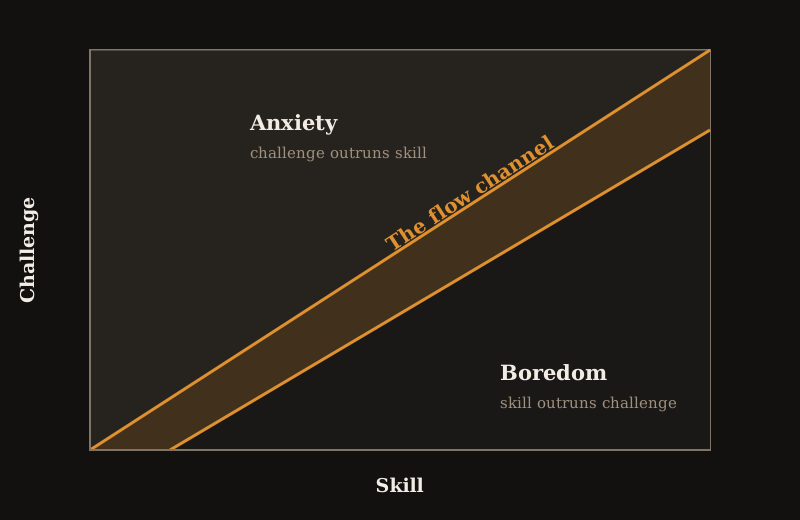
- The difficulty matches your skill. Too hard produces anxiety, too easy produces boredom, and the workable band sits between them.
- The goal is clear. You know what finished looks like for this session.
- Feedback is immediate. You can tell whether what you just did worked.
Those three are arrangeable. They are properties of the task and how it is set up, so they can be decided at the start rather than hoped for in the middle. Everything else on the list is downstream.
Why does the goal have to be clear before you sit down?
Because working out what you are doing is a different activity from doing it, and the switch between them is where sessions dissolve.
“Work on the API” is not a goal, it is a subject area. There is no state of that being finished, so there is no feedback, so two of the three preconditions are gone before you start. “Get the auth middleware returning the right error shape for expired tokens” is a goal. You will know within minutes whether it worked, and you will know when it is done.

This is why the planning is worth doing at the end of the previous session rather than the start of the current one. Deciding what to do is analytical, deliberate work, and it is a poor on-ramp: you are asking your attention to change gear at exactly the point where it needs to settle. Leaving yourself a specific first move means the session starts with doing.
Why is immediate feedback the one people underrate?
It is the condition most often missing in the kind of work people most want flow for, and it is quietly a property of your tooling rather than your character.
A test suite that runs in two seconds and one that runs in ninety are not the same working environment, whatever the totals say at the end of the day. Ninety seconds is long enough to check something else, and checking something else is the interruption. The same applies to a slow build, a preview that needs a manual refresh, a linter that only reports in CI, a design tool that renders a change half a second after you make it.
The fastest available improvement to most people’s flow conditions is not a new ritual. It is shortening whatever loop currently tells them whether the last thing worked.
Does the environment actually matter, or is that just aesthetics?
It matters, but not in the way the genre usually implies. The environment is not itself a trigger. It is what determines whether the three real conditions can survive contact with a working day.

The clearest evidence is about interruption. A study of 24 information workers, shadowed second by second at their desks, found that 57 percent of their working spheres were interrupted. The cost is not the interruption itself, which is usually brief. It is the climb back: the skill-challenge balance you had found is gone, the goal has to be reloaded, and the feedback loop restarts from cold.
So the useful question about a workspace is narrow. Does this arrangement protect an uninterrupted stretch long enough for the three conditions to hold? Notifications off at the source rather than dismissed, one task visible rather than nine, a physical or social signal that you are unavailable. The six conditions are all variations on the same question.
What the environment cannot do is manufacture the preconditions. A well-arranged room with a vague goal in it produces a pleasant hour and nothing else, which is the failure mode the aesthetic version of this subject reliably produces.
What about the entry ritual?
It works, and the reason it works is more ordinary than usually advertised.
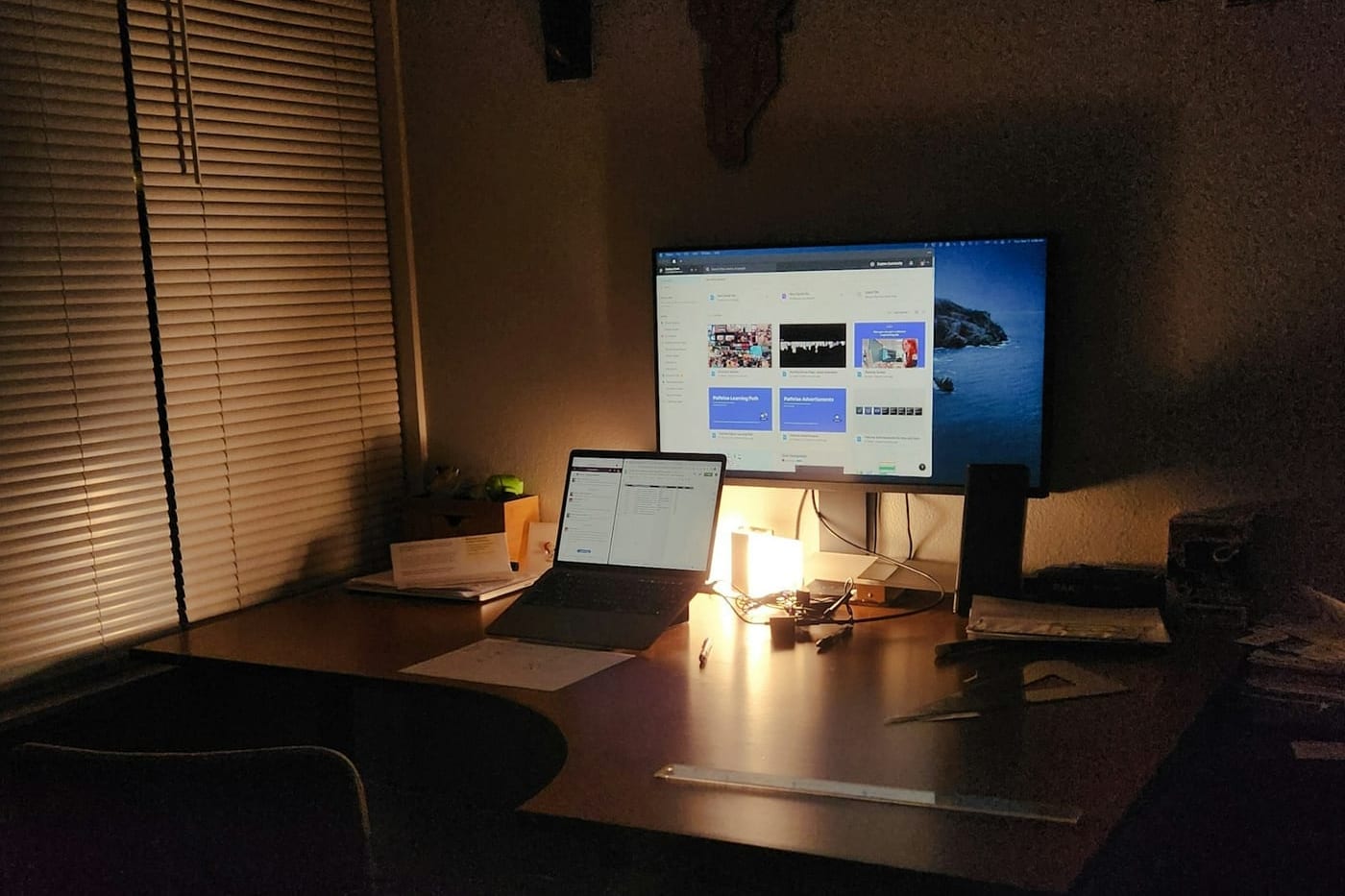
A repeated sequence before a session does not induce anything neurologically special. What it does is remove the decisions that would otherwise sit between sitting down and starting. If the first ten minutes are always the same, that stretch requires no choices, and you arrive at the actual task with your attention still intact rather than spent on setup.
Which also means the content of the ritual is close to irrelevant, and every argument about the correct one is beside the point. Same sequence, same order, every time. That is the whole mechanism.
How much of this is actually established?
Less than the confident version of this subject suggests, and it is worth saying so.
Flow research rests largely on self-report, which carries the biases that implies: people describing a good working session afterwards, from memory, in terms the interviewer supplied. The theory also does not account well for individual differences in personality and motivation. And by the honest summary of its own limitations, it “does not provide clear guidelines for how to induce flow in different contexts”. It describes a state well. It is much weaker as an instruction manual, which has not stopped a large industry from selling it as one.
Treating the three preconditions as the actionable part is a way of staying inside what the evidence supports. They are concrete, they are arrangeable, and you can tell whether you have them.
The short version
Before a session, ask three questions. Is this pitched at about the right difficulty? Do I know what finished looks like? Will I find out quickly whether what I did worked?
Three yeses and the conditions are in place. Whether the rest of it arrives is not up to you, and the useful move is to stop treating that part as a technique. Get the environment out of the way, get the loop short, and start.